
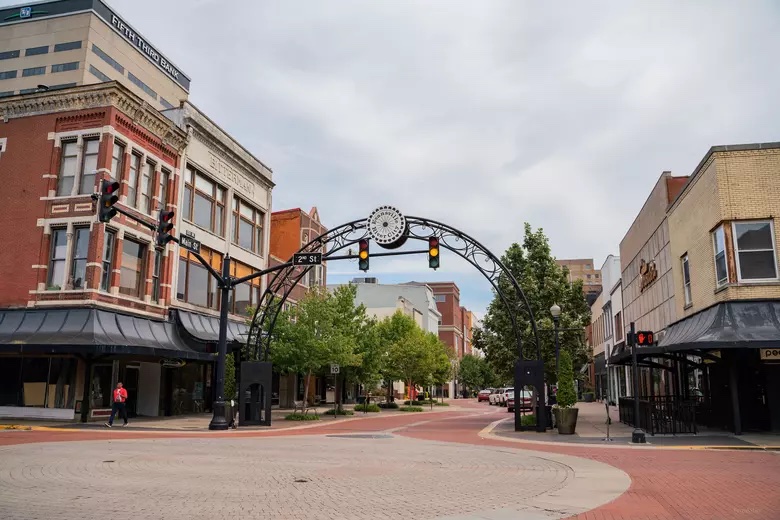
Amazon Considering
Southwest Indiana
Amazon is in the very early stages of evaluating a potential data center development in Southwest Indiana. We explore many potential locations, but we move forward only where the conditions support responsible development, community priorities, and lasting value. This website provides information on how Amazon approaches data center development.
This website is intended to help residents of Southwest Indiana understand how Amazon approaches data center development and what a potential project could mean for the community. We will update this site to share information, address common questions, and provide updates.
Our Commitment
Amazon has been building and operating data centers for more than 20 years, and we’re committed to being good long-term partners in the communities where we operate, and our employees live. Learn more about our commitment to responsible data center development here.
Amazon pays the full cost of the electricity its data centers use, and pays for the new infrastructure needed to serve them. That includes transmission lines, substations, and grid upgrades. Those costs are not passed to residential or business customers.
Amazon has entered binding, enforceable agreements with its utilities in Indiana to ensure that the costs to power our data centers are not passed on to other customers. In fact, ratepayers in both utilities serving Amazon data centers will see cost savings because of our data center investments.
Learn more about how Amazon is protecting energy affordability in Indiana here.
Amazon data centers are designed to use as little water as possible. Our facilities rely on outside air for cooling most of the year and switch to water-based cooling only during the hottest periods.
In 2025, Amazon’s global data center operations used 0.12 liters of water per kilowatt hour, which is more than seven times more efficient than the industry average of 0.84 liters.
Amazon designs its facilities to minimize impact on surrounding communities, and we are committed to meeting or exceeding all local, state, and federal standards. For example, we invest in industry-leading sound management, working with acoustic engineers throughout design and construction to keep noise levels low and designing to federal guidance for community health and welfare, which is often stricter than local requirements. We also design lighting to limit effects beyond the property line, using directional fixtures, shields, and timers to reduce impact on neighbors and wildlife. As this project progresses, we will work directly with the local jurisdiction to ensure we deliver on that commitment.
Amazon data centers create thousands of skilled jobs between construction and long-term data center operations, supporting local families and helping local small businesses thrive. We pay nationally competitive wages that often exceed the local and national median, and provide healthcare benefits from day one on the job. We prioritize local hiring and procurement wherever possible, providing economic opportunity and impact to residents, local contractors and service providers.
When Amazon builds a data center, we also meaningfully invest in the community around it. We tailor our contributions to nonprofits and community organizations to address the needs that communities identify as most important to them, such as access to community college degrees, skills and job training, and energy and water preservation and affordability. At the same time, we work with local officials to ensure our contributions to the local tax base are passed along to residents in the form of lower taxes and to improve schools, hospitals, fire and police departments, parks, roads, and other community services.
Amazon in Indiana
Amazon is making historic investments in data center infrastructure in Indiana. These investments are already creating economic growth and jobs, and providing new sources of funding for schools, roads, and other essential public services.
Today, Amazon has data centers under development in St. Joseph County, Jasper County, and the City of Hobart.
St. Joseph County
- Announced in 2024, the St. Joseph County data center campus is still undergoing construction as of September 2026, however some buildings are operational.
- The New Carlisle campus employes over 1,000 full-time Amazon staff as of July 2026. Roughly 80 percent live in Indiana and more than 450 are St. Joseph County residents.
- Over 35 years, the site is expected to contribute over $2 billion in property tax revenue. Under its prior agricultural use, the same land would have generated roughly $1.2 million over that period.
- Amazon is investing $114 million in water and sewer infrastructure improvements benefiting current and future users.
- A $9.5 million community enhancement agreement funds fire department equipment, law enforcement, road infrastructure, water quality monitoring, and student success programs.
As of September 2026.
Jasper County
- Announced in 2026, the Jasper County project is still in the permitting phase as of September 2026.
- Properties that currently generate about 70,000 dollars a year in property taxes are projected to deliver $98 million upfront and more than $23 million in new annual revenue through ten years of full operation, with local revenue increasing after that.
- Amazon is investing $25 million to improve local public water infrastructure.
- The campus is expected to use approximately 8 million gallons of water annually for cooling, which is less than a single golf course.
As of September 2026.
Hobart
- Announced in 2025, the City of Hobart campus is undergoing site prep as of September 2026.
- Across Northwest Indiana, Amazon plans to invest more than $15 billion, creating an estimated 1,100 new high-skilled jobs, and supporting thousands more in the data center supply chain.
- Our agreement with the city delivered $47 million in upfront community enhancement payments, with an additional $55 million to come as construction begins and tens of millions in annual payments to follow. Previously, the city’s entire annual tax levy was roughly $25 million.
- The project is anticipated to create more than 400 full-time jobs, alongside hundreds of construction jobs and supply chain positions.
- Amazon funds 100 percent of the water and sewer infrastructure its operations require, expanding the city’s systems at no cost to existing customers.
As of September 2026.
Frequently Asked Questions
These FAQs explain how Amazon approaches data center development and operations in general and are not tied to any specific project in Southwest Indiana. The information below is intended to provide general context. As project-specific details are confirmed, we will update this page with additional information.
Project Planning
Amazon is in the very early stages of evaluating potential sites. We explore many potential locations, but we move forward only where the conditions support responsible development, community priorities, and lasting value.
If we move forward, any future project will go through the local county’s full public review process, and we will work directly with residents and officials to understand local priorities, address concerns transparently, and ensure the best possible project to fit the community.
This website will be the best source of up-to-date information on any potential Amazon project. We will post updates as decisions are made, and we will update this website with answers to community questions as we receive them. If a project advances, we will also share opportunities for community engagement on this website, such as plans for open houses or webinars.
Water
Less than most people expect. Amazon’s data center facilities are designed be highly water efficient, using outside air for cooling most of the year and only switching to water-based cooling on the hottest days.
This approach allows us to reduce our power demand by 25–35% at precisely the moments when the electricity grid is most stressed. In our Northern Indiana designs, our data centers use water less than 2% of the year on average. For example, Amazon’s entire data center campus in Jasper County is expected to use approximately 8 million gallons a year. That’s less than a single golf course.
No, an Amazon data center would not cause water rates to increase. Amazon will pay all applicable fees and will fund 100% of water and sewer infrastructure needed for Amazon’s operations.
Protecting water quality and local ecosystems is a top priority for Amazon. Where possible, Amazon data centers use outside air to cool servers, which means we don’t always need water for cooling. When outside air isn’t cool enough, we use water to cool the air through an efficient process called direct evaporative cooling. After use, we discharge this water to local treatment facilities or waterways. For all water that leaves our facilities, we work closely with local environmental regulators and comply with applicable water quality requirements, including any limits on water temperature.
Energy
Amazon pays the full cost of the power its data centers use and funds the new infrastructure needed to serve them, including transmission lines, substations, and grid upgrades. Amazon has entered binding, enforceable agreements with all of our Indiana utilities serving our data centers to not only protect ratepayers, but to help lower energy costs over time. In NIPSCO territory, our agreement is expected to save ratepayers $1.25 billion over the next 15 years. And Indiana Michigan Power, which serves our largest data center in the state of Indiana, has cited data center growth as part of the reason it is lowering base electric rates for its customers. Learn more about how we are protecting energy affordability in Indiana.
When Amazon invests in new data centers, we also contribute to upgrading the grid because meeting the nation’s growing energy demand is essential to keeping power affordable and reliable, supporting everyday life, enabling economic growth, and strengthening U.S. competitiveness.
Living near a data center
Amazon works hard to ensure our data centers operate as quietly as possible and do not negatively impact our neighbors. Throughout design and construction, our team of acoustic engineers focuses on keeping noise levels low and ensuring that our facilities fit comfortably within the surrounding community. We design our data center operations to meet or exceed local jurisdictional sound requirements at the perimeter of our site.
Amazon data centers serve millions of customers, including hospitals, first responders, energy systems, and national security agencies. A single power failure could halt life-saving care, cut emergency communications, or cripple vital infrastructure. As a result, Amazon has built resilience into every layer of its operations, and emergency backup generators are critical to ensure our customers can access cloud computing during emergencies.
Emergency backup generators run very infrequently — on average 10 hours per year — mostly for brief tests to ensure they are ready and reliable when needed during rare emergencies. All testing must meet local noise and permit requirements and in Indiana we use our generators for a fraction of the time that our permits allow. This careful approach keeps facilities prepared for emergencies while minimizing any potential disruption to the community.
Jobs and the local economy
Amazon has committed to investing $33 billion in data center infrastructure in the state of Indiana. Over 1,000 people already work in Amazon’s Indiana data centers, and we expect that number to surpass 2,100 as we continue to grow.
Amazon data centers create hundreds of permanent, high-skilled positions, including technicians, support engineers, network specialists, engineering operations managers, and security specialists. Data centers also support thousands of additional jobs dedicated to the construction, operation, and maintenance of data centers with local contractors and small businesses.
We prioritize local hiring wherever possible and work with K-12 school districts, community colleges, universities, and state government to establish career pathways and training programs in the communities where we operate. In Indiana, this includes launching fiber splicing training at Ivy Tech and opening Indiana’s first Think Big Space at New Prairie High School.
Amazon is investing in free community college and hands-on workforce training for residents of our data center communities. Residents can pursue a certificate or associate’s degree in a high-demand field to increase job readiness for in-demand careers, including: electricians, HVAC experts, fiber opticians, IT, healthcare, education, public safety, and advanced manufacturing—all at zero out-of-pocket cost to students with Amazon covering financial gaps (out-of-pocket costs after aid). We have started to establish agreements with local community colleges and plan to launch the program in the next few months. Over the next five years, we estimate that we will connect over 300,000 students to free degree access in data center communities.
Community
When Amazon builds a data center, we also meaningfully invest in the community around it. Across Indiana, our data centers are projected to generate more than $3 billion in taxes and community payments that can fund schools, roads, and the public services people depend on. Beyond that, we fund community grants, employee volunteering, STEM learning spaces in local schools, and partnerships with local organizations on issues those communities identify. In addition, Amazon recently announced the Built Together community investment framework for data center communities, which will add more than $1 billion of investment in data center communities over the next five years. Under the program, communities will be in the driver’s seat, helping to determine what’s most useful for them across education, job training, energy affordability, water and energy preservation, and local priorities.
Amazon has been building and operating data centers for over 20 years. Our data centers are built for long-term operation and are continually maintained, upgraded, and modernized. The jobs our data centers create are long term positions, and the tax base is a durable. For example, in St. Joseph County, Indiana, the taxes Amazon will pay to the county are estimated to exceed $3 billion over the course of 35 years, while the prior use on the same land would have paid just $1.2 million over the same term.
Submit it through this site. We will answer, and where a question is one many people are asking, we will post the answer here, so everyone sees the same information.
Have questions?
If you live in Southwest Indiana and have a question about what Amazon is considering, please ask it here. We will answer to the best of our ability given the very early stage of consideration.
We want to hear your questions early so that everything that can possibly be answered now will be. If your question is not addressed above already and is one that many residents are asking, we will publish the answer on the FAQ page so everyone gets the same information at the same time.